
This 11-day, four-nation tour—Algeria (April 13–15), Cameroon (April 15–18), Angola (April 18–21), and Equatorial Guinea (April 21–23)—marks Pope Leo XIV’s first apostolic journey to Africa and his third international trip since his election in May 2025.
The Vatican released the full official program on March 16, 2026, outlining a packed schedule of 6 greetings, 10 addresses, and 8 homilies across 11 cities and more than 11,000 miles of travel.
The journey underscores themes of peace, interfaith dialogue, works of mercy, and the Church’s dynamic presence in the Global South—priorities that align closely with Leo XIV’s (the Chicago-born Augustinian) public emphasis on dialogue over force.
Verified details of the visit
The trip was announced by the Vatican in late February 2026 and responds to invitations from state and Church authorities in each country. It marks Pope Leo XIV’s first major overseas journey of 2026, following earlier trips to Türkiye and Lebanon in late 2025 and preceding a planned visit to Monaco in March.
The Cameroon leg, taking place from April 15 to 18, has drawn the most immediate local excitement, with a detailed itinerary now released through the official Vatican program. On Wednesday, April 15, in Yaoundé, the Pope will arrive at Yaoundé-Nsimalen International Airport for a welcome ceremony, followed by a courtesy visit to President Paul Biya at the Presidential Palace. He will then address authorities, civil society, and the diplomatic corps at the Congress Center, visit the Ngul Zamba Orphanage, and hold a private meeting with Cameroon’s bishops at the Episcopal Conference headquarters.
The following day, Thursday, April 16, Leo XIV will fly to Bamenda for a “Meeting for Peace” with the local community at Saint Joseph’s Cathedral, followed by an open-air Holy Mass at Bamenda International Airport before returning to Yaoundé.
On Friday, April 17, he will travel to Douala to celebrate Mass at Japoma Stadium, make a private visit to Saint Paul Catholic Hospital, and meet with university students and professors at the Catholic University of Central Africa. His final day in Cameroon, Saturday, April 18, will feature a Holy Mass at Yaoundé-Ville Airport, after which he will depart for Angola following a farewell ceremony.
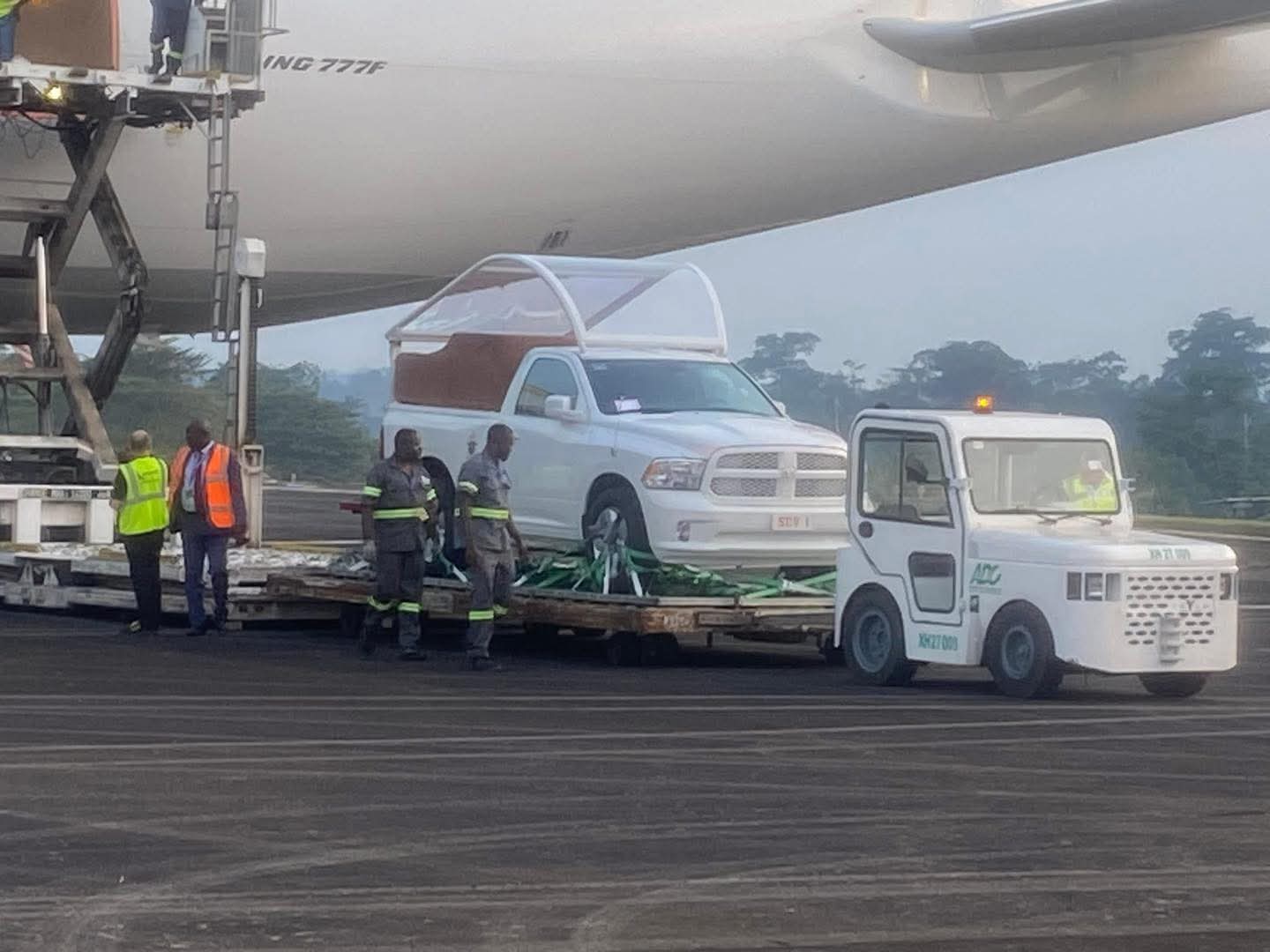
Local preparations have matched the user’s description precisely. Recent reports and social media from Cameroonian outlets confirm that the popemobile—a custom, fully electric vehicle designed for papal journeys—has arrived in Yaoundé ahead of schedule.
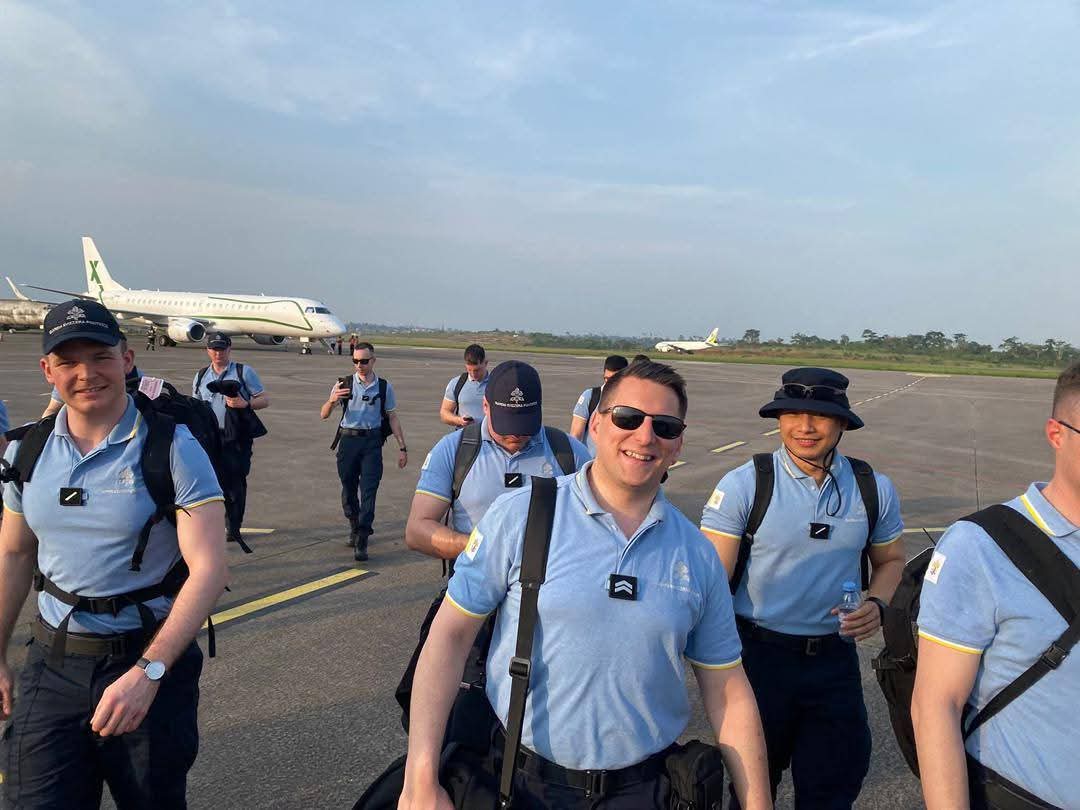
A contingent of the Pontifical Swiss Guard and Vatican Gendarmerie has also landed at Yaoundé-Nsimalen International Airport in recent days, welcomed by the Apostolic Nuncio and the Archbishop of Yaoundé. Broader logistics include resurfaced roads, upgraded drainage, and rehabilitated airports, with test flights already conducted at the long-dormant Mankon-Bamenda airport. Media accreditation is now open, and groups such as the Catholic Women’s Association have mobilized in preparation.
Given the visit’s scale, security coordination between Vatican and Cameroonian forces is a clear priority. The choice of Bamenda—epicenter of Cameroon’s long-running Anglophone separatist crisis—is particularly notable. Archbishop Andrew Nkea Fuanya of Bamenda, who also serves as president of the national bishops’ conference, has called the visit a “beacon of hope” and described the Pope as a “messenger of peace, ambassador of reconciliation, and promoter of justice” amid a conflict that has claimed over 1,800 lives, displaced hundreds of thousands, and disrupted education and daily life.
Analytical context
This journey carries layered significance for Pope Leo XIV, the African Church, and global geopolitics.
As the first U.S.-born pope and a member of the Order of Saint Augustine, Leo XIV’s itinerary begins symbolically in Algeria with visits tied to St. Augustine—including the Hippo ruins and the Basilica of St. Augustine—alongside strong interfaith gestures such as a stop at the Great Mosque of Algiers.
The focus on Africa highlights the continent where Catholicism is expanding most rapidly, contrasting sharply with declines in the West. The trip’s emphasis on mercy—seen in visits to orphanages, hospitals, and nursing homes—and its engagement with youth through university meetings reflect Leo’s consistent pastoral style.
The Bamenda stop is no accident. By inserting a high-profile “Meeting for Peace” and Mass into a restive English-speaking region plagued by separatist violence, the Vatican is leveraging the Pope’s moral authority to encourage dialogue. Local Church leaders view it as a potential catalyst for healing, even as pre-visit analyses noted security strains and political sensitivities surrounding President Biya’s long tenure and upcoming elections.
The broader African and global resonance of the journey is also significant. Stops in Angola, with its large Catholic population and Marian shrines, and Equatorial Guinea, the continent’s only Spanish-speaking nation, where the Pope will visit a prison and sites tied to a past explosion, further amplify messages of solidarity, development, and reconciliation.
In the wake of Leo XIV’s recent public critiques of “diplomacy based on force” and his calls for de-escalation, including on Iran, this trip reinforces his independent voice—prioritizing the Global South over alignment with any single superpower.
With departure from Rome imminent and final security sweeps underway, Pope Leo XIV’s Africa visit is poised to be both a pastoral triumph and a diplomatic statement.Photo Credit: Ugochukwu Ugwoke, ISch
Comments (0)
No comments yet. Be the first!
Leave a Comment
Your comment will be reviewed before publishing.